My Book Duo Won't Mount On Mac
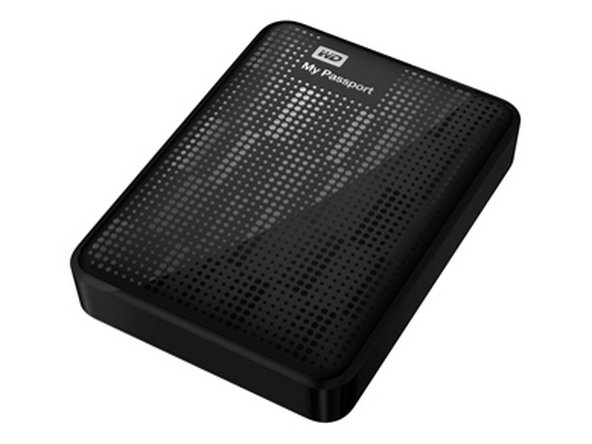
This answer explains what how to install a My Book Live or My Book Live Duo on Windows or macOS for the first time or after resetting to factory. It turns out that most of the time, Mac doesn't recognize external hard drives, USB flash drives, pen drives, SD cards, etc. Just because the drive is not properly connected. Since a good connection is a basic condition for secondary hard drives working on the Mac, we need to try these things step by step.
Most of the time, when you connect an external hard drive to your Mac’s USB port, you soon see it mount on the desktop. Apple likes to ensure these are easy to find, so they also appear in the Finder in the left-hand column under Devices, since Mac’s treat them the same way as another computer.
However, sometimes, an external hard drive doesn't show up. It’s annoying, especially when you need to transfer something right then. And besides, there can be a risk that data on the external USB pen, hard, or flash drive is corrupt, which means you can’t transfer what you need between devices at all.
Corrupt data can be one reason your Mac won't recognize an external drive, but there are other reasons too. Let’s take a look why this is happening and how you can get an external drive to appear on your Mac and get recover data to access to your documents.
How to fix an external disk drive that won't show up on a Mac
Why an external disk drive is not showing up? There could be a few reasons why a USB flash drive isn’t making an appearance.
Open an External Drive Not Showing on Mac
Get a huge set of top utilities for troubleshooting external hard drives not mounting on a Mac
Start with the basics:
- Check whether the drive is properly plugged in. It sounds obvious, but since this relies on a wire - either a USB cable or HDMI cable - if it’s not connected properly then it won’t appear on your desktop.
- Faulty cable. Assuming it’s plugged in correctly, not wobbly or loose, the cable could be at fault. Try connecting the same device with a different cable.
- Damaged USB or flash drive port. It could be a hardware issue with the Mac. If you’ve got another port, try connecting the device to that one.
- Reboot your Mac. Sometimes, if a USB disk won't boot, the cause is macOS issue. Hopefully, some data damage that can be fixed by restarting. Choose the Apple menu > Restart. Or press and hold the power button and, when a dialog box appears, click the Restart or press R. Restarting your Mac essentially clears your macOS’s memory and starts it up fresh.
- Incorrectly formatted drive. Not every external drive is optimized for Macs. It could be that you are trying to connect something only fit to interact with Windows devices. If you’ve got a PC or laptop, it’s worth connecting and seeing if you can access the files through another device. The best way to look for an incorrectly formatted drive is to go to
Apple (in the top toolbar menu) > About This Mac > Storage.
See if the external drive shows up here. For more information, go to the same menu option, then select System Report. - Mac not formatted to display external drives on the desktop. It could be that your Mac already recognizes the device, but just isn’t showing its icon on the desktop screen. Even if that is the case, the drive will still appear in the left-hand column of the Finder menu under Devices. You should be able to access your drive that way, and, in the Finder menu under Preferences > General, you can check External Drives to ensure that from now on it shows up on your desktop too.
- Reset NVRAM. To do this, shut down or restart your Mac, switch it back on and immediately press these four keys together for at least 20 seconds: Option, Command, P, and R. It should look as though your Mac has started again; if it has, release the keys when you hear the second startup chime. Hopefully, the hard drive has shown up now.
- Check Apple’s Disk Utility to see if an external drive is showing up. Disk Utility is within System Preferences, or you can find it using Spotlight. If it is visible, then click the option to Mount, which should make it visible on the desktop and in the External Drives option in the Finder menu.
Unfortunately, if none of those options has worked and the external drive still isn’t visible, then it could have crashed, or be well and truly broken. But there might still be a way you can recover the data on the external drive.
How to show connected devices in Finder
- Go to the Finder menu and select Preferences (Cmd+comma).
- From General tab tick External disks to ensure that from now on it shows on the desktop.
In the Sidebar tab you can choose which folders and devices will be shown in the left-hand column of the Finder window.
How to add cloud storages to Finder
You can also mount cloud storage as local drive on your Mac. By connecting Google Drive, Dropbox, or Amazon to your computer, you get more space for securely accessing and sharing files. For your ease, add cloud drives to Finder with CloudMounter app, so that you keep them close at hand. You can read detailed instructions on managing cloud storage as local drives here.
Repair the failed external drives with First Aid
If your drive is having problems, you can try to fix them yourself with First Aid and therefore get access to your files. First Aid tool will check the disk for errors and then attempt a repair as needed. It helps to verify and repair a range of issues related to startup HD and external drive problems. If you are able to fix the hard drive or SSD in your Mac (or an external drive) using Disk Utility you will hopefully be able to recover your files.
To run Fist Aid on an external hard drive:
- Open Disk Utility. You can searching for it using Spotlight Search or via Finder > Application > Utility
- Check on your external hard drive, click the First Aid tab and select Run to start running diagnostics.
If First Aid successful in fixing errors, the external drive should be available to mount. If the utility unable to repair issues, your drive truly is broken or formatted using a file system that the Mac cannot read - in this way we suggest you follow the next steps to recover data from a damaged disk drive.
How to recover data from a crashed drive
Thankfully, there is an app for that. Disk Drill is the world’s premier data recovery software for Mac OS X. Powerful enough to retrieve long-lost, mistakenly deleted files from Macs, external hard drives and USB drives and camera cards.
Get a file recovery app
With Setapp you get a pack of professional tools for file recovery and Mac maintenance.
An easy way to recover lost files on an external hard drive
Providing you already have Disk Drill Pro version, which you can get automatically by downloading from Setapp:
- Connect your drive to the Mac.
- Quit all other applications on the Mac, especially those that may be trying to access the external drive (e.g. iPhoto, Words)
- Launch Disk Drill.
- Click on the external drive that you are trying to recover files from. If it has partitions, you will see all of them. If, however, you still don’t see any volume to the external drive then you may need to try some of the steps above again or read the Disk Drill Scanning FAQs.
- To avoid the external drive being accessed during the recovery process, click Extras next to the drive or drive partition or file, then select Remount Volume As Read Only. A padlock will appear, protecting the drive during the process.
- Now click Rebuild (or Recover) next to the file(s) you are trying to recover. Once the scan is finished - it may take some time if the files are large - a list of files will appeal.
- Next, click Mount Found Items as Disk button on the bottom-left below the scan results.
- Disk Drill “strongly suggest saving the files to a different drive than the one you are trying to recover files from. Saving to the same drive substantially lowers your chances of recovery.”
- A drive icon will appear, which once you double click will give you the option to open the files as you would do before they were lost. Drag them to another location, such as your desktop or a folder on your Mac.
- Open the files to ensure they have been recovered properly and safely eject the external drive.
Disk Drill does have other ways to recover lost files but assuming there aren’t complications, this method is the most effective. Disk Drill Pro recovery app is available from Setapp, along with dozens of Mac apps that will make your life easier. Never have to worry about a crashed or corrupted external drive again.
A few more tips on getting your files back
- Macs and third-party apps that look after Macs, such as Disk Drill and iStat Menus come with a S.M.A.R.T. (also known as Self-Monitoring, Analysis and Reporting Technology) status monitor. If a SMART check reports errors, then it could mean the hard drive is at risk of failing completely. Within Disk Utility and Disk Drill, there are several solutions for this: Repair Disk Permissions and Repair Disk. If neither work, it’s recommended that you backup all of the data from the disk, erase, then run a SMART check again. The external hard drive should show up as Verified.
- Partitions can get lost within hard drives, temporarily hiding all of the information contained within. Disk Drill can help to identify and restore this information.
- Within Disk Drill, you can restore data when a hard drive is damaged or add formatting, which is also something Disk Utility can help with.
- CleanMyMac, another useful app available from Setapp, can help you identify external hard drive errors and repair them. It is an essential tool worth trying when you’re having external hard drive difficulties.
Try all these apps for free
Get a huge set of top apps for keeping your Mac in shape. Best utilities in one pack, give it a go!
Alternative ways to recover data from an external hard drive
Reset the System Management Controller (SMC) if your Mac shuts down when you plug in an external hard drive. Then use a different port to connect the external hard drive. If you’ve got a battery that you can’t remove:
- Shut down and unplug the power adapter
- Press Shift-Control-Option and the power button at the same time. Do this for 10 seconds
- Release all keys
- Plug the power adapter back in and switch your Mac back on
For Macs with removable batteries, you need to switch them off, remove the battery, then press and hold the power button for 5 seconds. After that, put the battery back in, plug in the power adapter and switch the power on again.
What’s your file format? One reason your Mac isn’t recognizing the hard drive is the file format. Windows uses NTFS file formats, while Macs, up until the introduction of Sierra, have used HFS+. Now, Apple has introduced the Apple File System (APFS) for newer operating systems. It is possible to format a hard drive so it can be read on Mac and Windows computers, providing you format using exFAT. However, if you’re having problems accessing the files and the issue is due to formatting, you will need to connect it to a device it can be read on, and then format the files correctly for the computer you are going to use it on next.
How to make Ext2/Ext3 drives readable on Mac
The common issue is Ext2- and Ext3-formatted drives are not readable on macOS. There are two ways to access such external drives on your Mac – via Linux OS or FUSE system. The easiest would be installing Linux to a secondary drive or virtual machine.
If you go with Linux installation, dual boot your Mac with Linux on another drive and use FAT32 as a transfer intermediary. If you don’t have a drive to install Linux to, use virtual machine as an interface for it. Transferring can be done the same way – with FAT32, or via network.
Another option for reading Ext2/Ext3 disks is mounting disk with Filesystem in Userspace (FUSE). Basically, it works as an extra interface enabling file system access via specially installed modules. Here’s how to mount drives with FUSE:
- Install FUSE for macOS or MacFUSE as well as fuse-ext2 module.
- Use the following Terminal command to enable Disk Utility’s debug menu and see all partitions: defaults write com.apple.DiskUtility DUDebugMenuEnabled 1
- Attach your Ext2/Ext3 drive and locate the device name via Disk Utility.
- In your user account, create a folder to be used as a mount point.
- Use the following Terminal command to mount the drive as read-only: fuse-ext2 /dev/disk2s2 /Volumes/mountpoint
- For write support, use the command: fuse-ext2 -o force /dev/disk2s2 /Volumes/mountpoint
And that’s not the only case where Terminal helps you access external drive.
Employ the handy all-powerful Terminal, which always comes forward with solutions for difficult problems. Especially if System Information does recognize the USB or hard drive, but continues to hide it from you, disconnect the drive and try to find it using the Terminal, which you can find in Applications > Utilities.
- Once in the Terminal, type in the command diskutil list
- A list with information about volumes and drives should appear
- Look for a section labelled /dev/disk_ (external, physical)
- Make a note of the whole line after the word disk
- Now put the following command into the Terminal diskutil info disk followed by the number or digits assigned to that disk
- Now you should see detailed information about the drive, therefore confirming that your Mac can and does recognize it
- Eject using the Terminal by entering the command diskutil eject disk followed by the number or digits assigned to that disk
- Physically remove the disk from you Mac
- Plug it back in and your Mac should recognize it
Console is also reliable when it comes to solving tricky problems, although it isn’t always that easy to use. You can find Console under Applications > Utilities > Console. Console shows if an external drive or any error is detected under the Errors and Faults tab. If no errors show up, then the problem is not caused by the device.
To sum up, there are lots of potential solutions for a Mac not reading an external hard drive. If we were to pick one, Disk Drill seems to be the most well-rounded, offering plenty of customizations and power in an easy-to-use interface. Disk Drill Pro recovery app is available via Setapp, along with 150+ Mac apps that strive to make your life much much easier. At the very least, you’ll never have to worry about a crashed or corrupted external drive ever again.
Today, we will be focusing on the basics – how to integrate the QNAP NAS into your daily workflow as a creative user. Owning a Mac is more than it seems since for some people it seems simple and often regarded as the “easy-to-use” computer. But for those who rely their lives on a Mac or multiple Macs, understand how intuitive it is and its important stance of our digital lifestyles. I’m not saying that owning a Mac makes you creative user, but as blunt as I may sound, many Mac users appreciate design(either the product itself or in general), and how seamless the integration it is between its creative applications.
Why do you need a QNAP? Well here is a quick table pointing out some differences in the different types of backup/storage devices that are often seen and used today. With a QNAP NAS, you get much more storage capacity, data protection(RAID), abilities to collaborate, file share and remote access. Life is easier when there’s no need to transfer files through a USB dongle, or external hard drive.

Today we will be going over on some simple demonstrations and scenarios on how to integrate a NAS into your digital lifestyle.
Scenario A.
You are an artist and you create artwork for a living and often uses software such as Adobe illustrator, and sometimes edit photos and images with Adobe Photoshop. You would often find yourself playing with Ai during your spare time and find it fascinating how your brain suddenly becomes more creative when it’s not at work. You save your files onto your personal Mac and under your local folder. Next day, you arrive at work and you forget that your file is saved onto the Mac at home, not anywhere else such as Dropbox or Google Drive.
Solution:
Instead of paying monthly fees you would pay a one time fee (the QNAP NAS).
One year of Google Drive and Dropbox for 1TB of total storage is $9.99 x 12 = ~$120.
$120 a year on fixed storage of 1TB is pretty expensive, as you would end up having to delete some files to not go over 1TB. When you save a video of 120MB+ or more, you would have to use that disk space on your Mac at home and work for that particular file. The public cloud services give you convenience but does not save your Mac’s capacity, and along those lines it is not 100% private.
Google Drive Dropbox
Suggested workflow(that may work for you)
- Download the file you’d like to work on by dragging the file onto your desktop
- Edit your file like on your normal desktop
- Save the final copy onto your QNAP
- Delete or archive it (if not needed anymore) off your Mac. (You end up saving your capacity, and you’d still have the ability to access, share or edit this file wherever you are)
The QNAP NAS would be useful in this situation. Simply save your files onto the QNAP, and by using FTP, SMB or AFP you could easily access your files on the NAS(stationed at home or work) whenever you want. E.g. Save file under “shared” -> find your NAS name, in this instance mine was called 431Plus (AFP). Note: AFP is the native protocol that offers file services for Mac OSX.
On your Mac, go to the top and click “Go” and then “Connect to Server”
After hitting “Connect” you will have to enter your login credentials. Enter your NAS username, default admin and password is whatever you’ve set.
Unmistakably Office, designed for Mac. Do your best work—anywhere, anytime and with anyone. Install Office for Mac now. Install Office for Mac now. Get started quickly with new, modern versions of Word, Excel, PowerPoint, Outlook and OneNote—combining the familiarity of Office and the unique Mac features you love. Macbookservices.com microsoft office for mac download. Word, Excel, PowerPoint, Outlook, OneDrive, Skype for Business, and OneNote will install and run on macOS 10.14 Mojave. Microsoft fully supports Office 2016, Office 2019 and Microsoft 365 for Mac on 10.14 Mojave when you have the following Office updates installed: Microsoft 365/2019 - Build 16.17.0 or later. Office 2016 - Build 16.16.2 or later. Open Microsoft Office documents on your Mac. You can use the Pages, Numbers, and Keynote apps to open documents you created with Microsoft Office. Office 365 provides experiences tailored to the Mac and macOS, like Dark Mode, Continuity Camera, OneDrive Files on Demand, and Touch Bar support on the MacBook Pro. Microsoft Office Home and Student 2019 provides classic Office apps and email for families and students who want to install them on one Mac or Windows 10 PC for use at home or school. Classic versions of Office apps include Word, Excel, and PowerPoint. One-time purchase for one device, Mac or PC. Requires macOS or Windows 10.
Select which folder you’d like to go to and when connected to your server, you can then save your file onto the NAS.
After saving the file onto the QNAP NAS, you would then be able to access this file anywhere you want, and either download it to your local workstation, or edit on the spot.
S. Kuo
I'm the marketing specialist here at QNAP and I think a part of me wants to write for this lounge because I've learned so much from scratch on network attached storages. I want to share what I think works, or is useful to all the readers out there and how a QNAP can change your digital life!